Home › Services
Privacy fence Ann Arbor projects, planned from the survey pin to the gate latch
A solid fence is a bigger build than it looks from the sidewalk. Every panel catches wind like a sail, every post has to sit below a Michigan frost line, and the whole run has to land on your side of a property line that may not be where the old hedge suggests. This page walks through a privacy fence project in Ann Arbor and across Washtenaw County from first idea to the last latch: why people want one, who sets the height rules, how the line gets found and marked, what goes into the ground, how slopes and gates are handled, and what a quote should spell out before you sign anything.
Why Washtenaw County homeowners put up solid fences
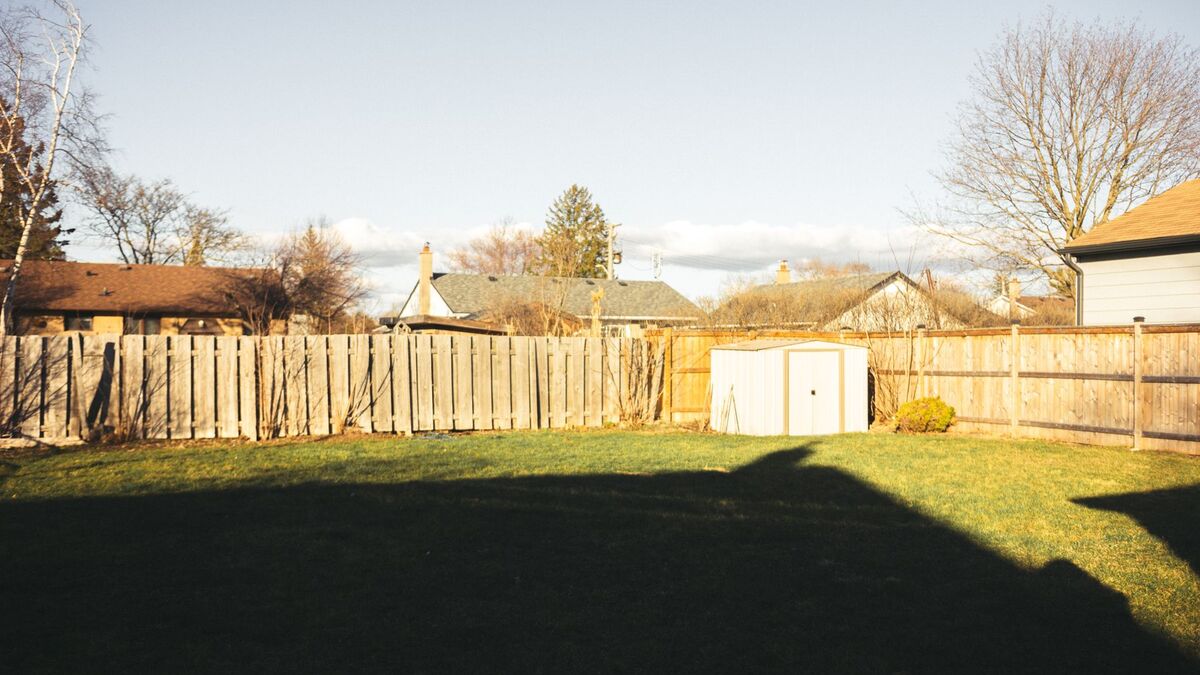
Most requests start with one specific view someone wants gone. A neighbor's second-story deck looks straight down onto your patio. A new hot tub sits a few steps from a side lot line. A house backs onto a busy collector road or sits within earshot of US-23 or I-94, and headlights sweep the yard at night. A solid fence fixes the sightline, softens traffic noise a little, and turns a backyard into a room you actually use.
Dogs are the other big driver. A board fence a dog cannot see through tends to cut down on fence-line barking, and built tight to the ground it contains a jumper or a digger better than an open style.
Height limits come from your zoning code and your association, not from the contractor
How tall a fence may be is decided by whoever governs the land under your house. Inside the city that is Ann Arbor's zoning code. In Pittsfield, Scio or Superior Township it is the township ordinance, and in a village it is the village code. Each sets its own rules for rear, side and front yards, and front-yard rules are almost always stricter.
Corner lots carry an extra wrinkle. Most codes protect a sight triangle near the intersection so drivers can see around the corner, and a solid fence inside it is usually restricted.
Then there is the homeowner association. Many township subdivisions have covenants that limit height, style, color and material, and some require written approval from a review committee. Association rules can be tighter than zoning and are enforced separately. Read both documents and get any approval in writing before a single board is ordered.
Finding the property line and marking the run
A fence built a foot onto a neighbor's land is a problem that never fixes itself. The cleanest starting point is a recent boundary survey.
Survey pins are usually iron rods or pipes at lot corners, often buried under turf or mulch after years of yard work. If pins are missing, disturbed, or disagree with what the neighbors believe, bring in a surveyor before anyone digs. Many owners hold the fence a short distance inside the line so they can maintain the outside face, and a short talk with each neighbor about plan and timing prevents most disputes.
- Stake every corner and every change in direction, then pull a tight string line between stakes.
- Mark each gate opening on the string so post spacing can be worked out around it.
- Note trees, roots, downspouts, window wells, air conditioners and anything else crowding the line.
MISS DIG 811 comes before the first post hole
Michigan's call-before-you-dig service, MISS DIG 811, is free, and skipping it is never worth the risk. A post-hole auger can cut a gas service, a buried electric line or a fiber drop in a fraction of a second. Whoever digs files the ticket, then utilities send locators to paint and flag their lines.
Those marks only cover public utility lines. Private lines you own are not marked: a feed to a garage or shed, landscape lighting, irrigation, a pet containment wire, a line to a detached hot tub. Tell the installer about them, and if nobody knows where one runs, a private locating service can trace it.
- File the locate ticket with the address and a clear description of the dig area along the fence line.
- Check that paint and flags cover the whole run, including gate posts and corners.
- Hand-dig near any mark instead of running a power auger through the zone.
Posts for a solid fence carry far more load than posts for an open one
A picket fence lets wind pass through. A privacy fence does not. Every solid section is a flat face that a west wind or a summer storm pushes against, and that force goes straight down into the posts. That is why privacy fence posts are usually heavier, set deeper and spaced more carefully than open-style posts.
Depth is governed by frost. In a southeast Michigan winter the ground freezes well down, and wet soil that freezes expands and can lift a post that stops short of the frozen layer. The hole has to reach below that zone. The local building department for your address states the required depth, so ask them or have the contractor confirm it on the proposal.
Soil changes the picture. Much of the county sits on clay and loam that holds water, with sandy or gravelly glacial pockets in places. Wet clay around a post is exactly what drives heave, so installers often put gravel in the bottom of the hole, crown the concrete so it sheds water, or flare the footing bottom so it resists being pulled upward.
Leave a gap at grade so water and snow can move
Boards that touch soil wick moisture, stay wet and rot from the bottom up. A small, even gap under the fence keeps boards dry, lets a string trimmer clean the edge, and gives meltwater somewhere to go. Owners with small dogs sometimes add a buried barrier or a rot-resistant bottom board rather than running boards into the dirt.
Drainage matters more on lots with wet low spots, common on ground sloping toward the Huron River and its creeks. A solid fence built tight across a swale acts like a small dam: water backs up uphill, soaks the posts and pushes sediment against the boards. Walk the line after a hard rain before the layout is final, and plan an opening where water clearly travels.
Stepping or racking a fence on sloped ground
Rolling ground is normal around here, and a privacy fence has to deal with it. There are two basic approaches, and the right one depends on grade, material and the look you want.
- Stepping keeps each section level and drops it down like a stair from post to post. It suits rigid panel systems and steady slopes, though every panel ends up with a wedge of open air beneath its downhill edge, which some owners close with a kickboard or soil.
- Racking tilts the rails so the fence follows the ground in a smooth line while boards stay plumb. It closes those gaps and reads naturally on gentle, uneven terrain, but not every panel product can rack, and steep grades push its limits.
Gates in a solid fence need their own planning
A solid gate is heavy, catches wind on a hinge, and gets opened thousands of times. That is why gates are usually the first part of a privacy fence to sag or stop latching. The hinge post should be the stoutest post in the line, set deep and braced, because the gate levers its full weight against it.
Think about width before posts go in. A walk gate fits a person but not a riding mower, a garden cart or equipment brought in later, so many owners add a double drive gate on one side of the house.
Good hardware means heavy hinges sized to the gate, a braced frame or adjustable anti-sag kit, a latch reachable from both sides if needed, and a drop rod on double gates. Around a pool, the barrier rules adopted by your local code cover self-closing and self-latching gates, latch placement and openings, and the code sets the figures. Fixing a sagging gate on an existing fence is covered on the privacy fence repair page.
Which side faces out, and why it matters
Convention puts the finished face, the side without exposed posts and rails, toward the neighbor or the street. It is the polite choice, and in some communities zoning or covenants require it. If you want a good face on both sides, styles such as shadowbox and board-on-board look finished from either direction, covered on the wood privacy fences page.
The usual sequence, and a realistic sense of timing
Most projects follow the same order, though each stage varies in length.
- Site visit: the contractor walks the line and looks at grade, soil, trees, drainage, style and gates.
- Proposal: a written scope and price with layout, materials, post details and gate specs.
- Approvals: you confirm zoning, apply for any permit and get association sign-off if needed.
- Locates: a MISS DIG 811 ticket is filed and marks are checked.
- Posts: string lines, holes, posts set plumb and footings left to cure.
- Framing and boards: rails or panels go up, infill is attached and the top line is checked.
- Gates: gates are hung, adjusted and latched, and caps or trim go on.
- Walkthrough: every gate, line and the cleanup are checked before final payment.
What a complete privacy fence quote should spell out
The contractor sets the price after seeing the site. It moves with the length of the run, the allowed height, material and style, number of gates and corners, rocky or rooty ground, slope, removal of an old fence and how hard the yard is to reach.
- A layout drawing or description with total length and each gate location.
- Fence height and how grade changes will be handled.
- Material, style, finish and which face points out.
- Post material, size, hole depth and footing method, with depth checked against the building department.
- Gate width, frame, hinges, latch, bracing and drop rods.
- Removal and disposal of any old fence, and whether stumps or roots in the line are included.
- Who handles the permit, the MISS DIG ticket and confirming the line.
- Payment schedule, cleanup and what workmanship coverage applies after the build.
Choosing the material and taking the next step
Each material has its own page. Wood is the traditional, flexible choice, covered on the wood privacy fences page. Solid vinyl trades upfront cost for low maintenance on the vinyl privacy fences page, and the heavier low-upkeep option is on the composite fences page.
Washtenaw County runs from older in-town lots to township subdivisions and open acreage, and each of the communities on the areas page has its own terrain and rules. To get a real number, use the contact page to describe the house location, the approximate length of fence you have in mind and what the yard looks like in pictures; a local fence contractor can then visit and write it up.
Privacy fence Ann Arbor projects — common questions
Do I need a permit to build a privacy fence in Ann Arbor?
The answer hinges on which jurisdiction covers the lot and the fence you plan. The city, each township and each village set their own rules, and some require a permit or zoning approval for any new fence while others only require one in certain yards or above a certain height. Check with the building or zoning office for your exact address before ordering material, and ask whether pulling the permit is part of the proposal. Association approval is a separate step.
How close to the property line can I put a fence in Washtenaw County?
There is no single county rule. The zoning code for your city, village or township decides whether a fence can sit on the line or must be held back, and whether front, side and corner yards are treated differently. Many owners set the fence slightly inside the line anyway so they can reach the outside face. Find the survey pins first, read the local zoning text, and talk with the neighbor on the other side.
Can my neighbor make me put the nice side of the fence facing them?
Sometimes, but the neighbor is not the one making the rule. Some zoning codes and many association covenants require the finished face to point outward toward adjoining lots or the street, and where that rule exists the city, township or association enforces it. Where it does not, facing the good side out is still the common courtesy. A style that looks finished from both directions avoids the argument entirely.
How long does a privacy fence installation take from start to finish?
The physical build is often the shortest part. Once posts are set and footings have cured, framing a typical backyard can move quickly, though long runs, steep grades, many gates or rocky ground add time. The longer waits usually come first: scheduling the site visit, reviewing the proposal, getting a permit and association approval, and waiting on the locate.
Why are privacy fence posts set in concrete sometimes heaving out of the ground?
Heave happens when wet soil around or below a footing freezes and expands, gripping the post and pushing it upward. Posts that stop above the frost zone, footings wider at the top than the bottom, and heavy clay holding water against the post all make it worse. Reaching below the depth your building department calls for, adding a drainage layer and crowning the footing top all help prevent it.
Is it better to build a privacy fence in spring or fall in Michigan?
Both work. Spring brings workable soil and long days, but also the heaviest demand and wet ground that can delay digging. Fall often has drier soil, more open schedules and cooler working weather, with the catch that the ground will eventually freeze and concrete needs reasonable temperatures to cure. Whatever the season, handling approvals and locates early keeps the project from stalling.
Talk through your site
Start with the address, what you want done, and a few photographs of the area, including anywhere water sits after a heavy rain.
Related work
Wood Privacy Fences
Cedar and treated pine privacy styles, board-on-board and shadowbox, and how wood weathers here.
Vinyl Privacy Fences
Solid vinyl privacy panels, what separates good vinyl from cheap, and how it handles hard winters.
Composite Fences
Wood-plastic composite and capped composite privacy fencing, its weight, its posts and its tradeoffs.
Privacy Fence Repair
Heaved posts, wind-pushed sections, rotted rails and sagging gates on solid fences, repaired or replaced.
Across the metro
Ypsilanti
Older east-side neighborhoods with small lots, alleys and mature trees beside newer township subdivisions.
Saline
South-side town with family subdivisions, association rules and open farmland edges.
Dexter
Village and township lots near the Huron River with hills, wooded edges and wet low spots.
Chelsea
Western Washtenaw lots with acreage, long property lines, rolling ground and deer pressure.